
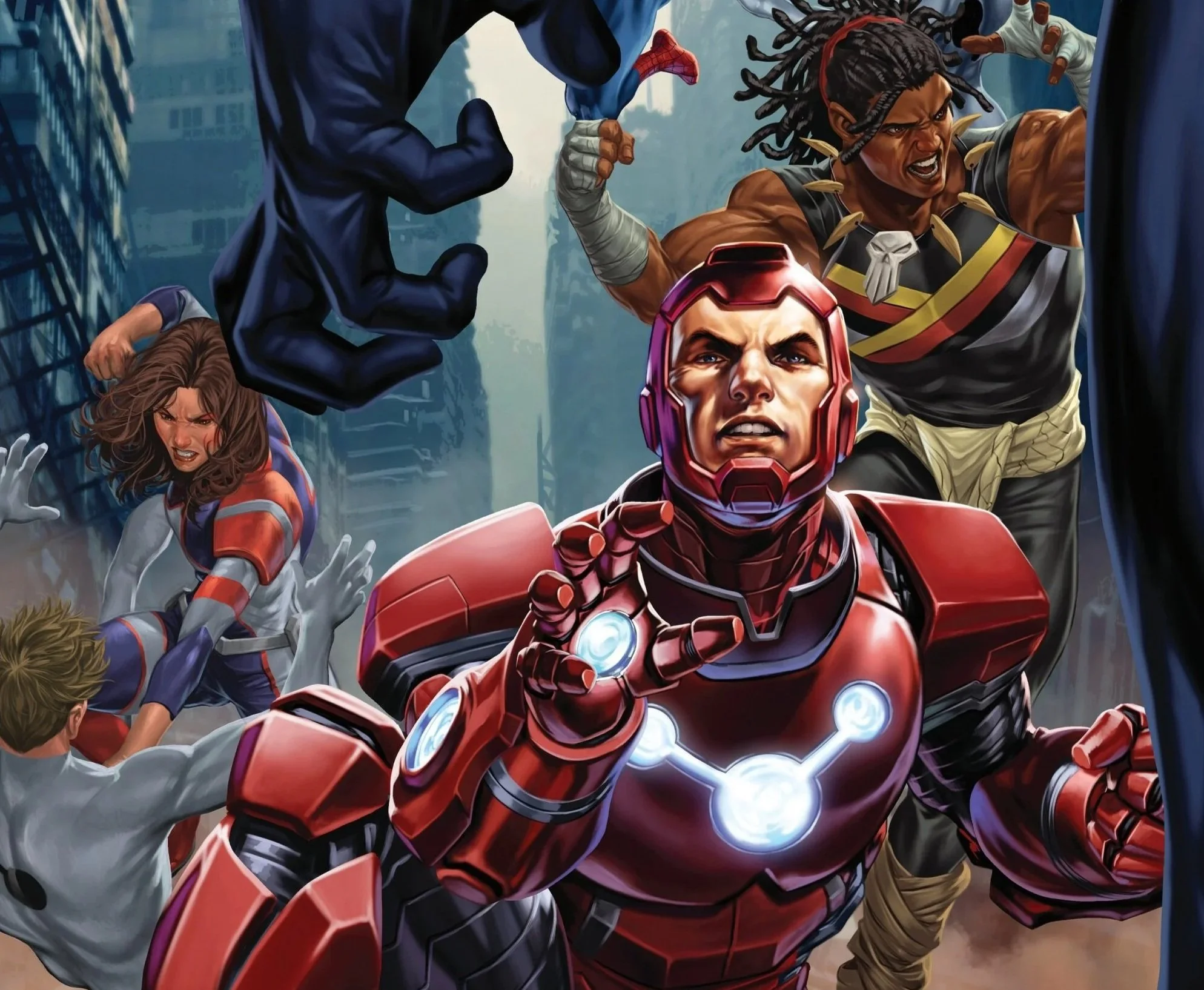
Bleak circumstances right off the bat—Ultimate Endgame has already put our heroes on the back foot in their ultimate battle against the malevolent Maker. But while the tide is turning toward hope outside of the City, inside its time-displaced walls, our heroes are faced with the most horrifying threat of them all: The Maker IS the City. And the only person who knows the first thing about stopping him is a lunatic geezer who talks in four-dimensional grammar.
Ultimate Endgame #2 plops readers right into the thick of these insane stakes, opting for a lot of "tell" rather than "show." There’s no real shortage of emotional turmoil or Grant Morrison-esque levels of humor and exposition (my favorite kind), and for a breezy 30+ page issue, this certainly feels longer than expected. But sometimes, with everything in play—everything, everywhere, all at once—one does wonder: is Marvel buying time for the big finale, or do they actually have something of value to say here? That is for you, the readers, to judge.
The City That Only Seethes
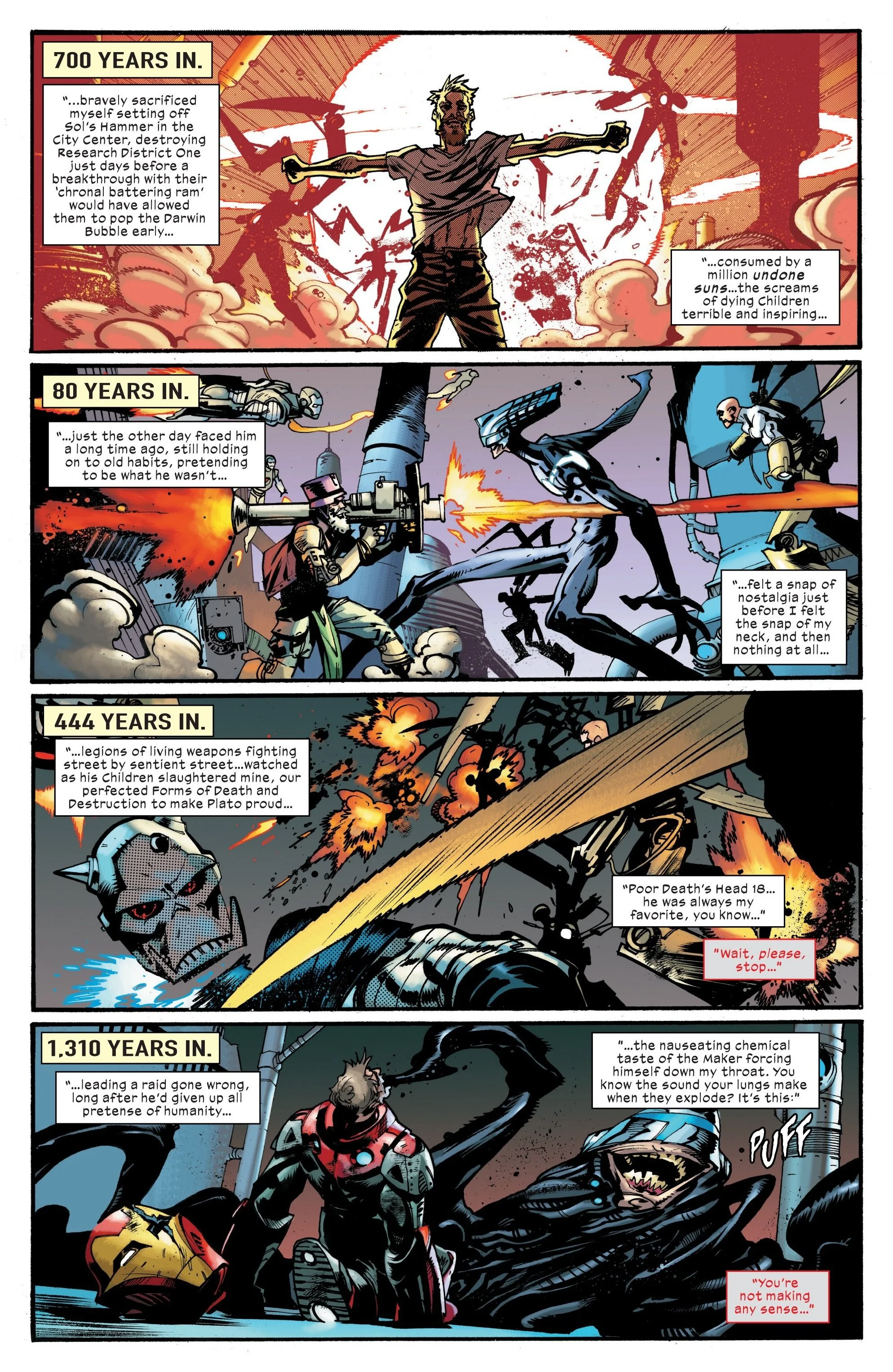
Issue #2 picks up immediately after the bombshell that was issue #1: The Maker is the City, and Immortus has been driven truly over the deep end after spending eons battling him. It’s been a long war, filled with horror and heartache, and Immortus’s mind has been utterly shattered in the process. He recounts to the Ultimates how the Maker became the City itself—winding his very body through the steel and flesh of the civilization over the years until everything was… him.
For Tony in particular, seeing his father in this state while grasping the hopelessness of the situation pushes him further into despair. But there’s no time to mourn; the Maker’s children finally discover Immortus’s pocket dimension, launching a brutal attack that forces the Ultimates to flee—but not without some truly gut-wrenching sacrifices. Even in their escape, things aren't all sunshine and rainbows, as the next phase of the Maker’s plan is revealed with the promise of even greater heartbreak to come.
On a relatively more positive (I said relatively) scale, things outside the City are on the upswing. As the Ultimate Network begins to fight back across America, Wakanda is finally making its presence felt. Having recently opened its borders at the end of Ultimate Black Panther, T’Challa has committed his might to the eradication of the Maker—and he’s sending Killmonger to do the deed. Making his way across Africa and Europe to reach Latveria and the City, Killmonger’s arrival promises to shake things up even further. But even with more allies joining the field, the horrors of the Maker’s newest evolution are far from contained, as those in and around Latveria succumb to something grotesque and contagious.
The Ticking Timer
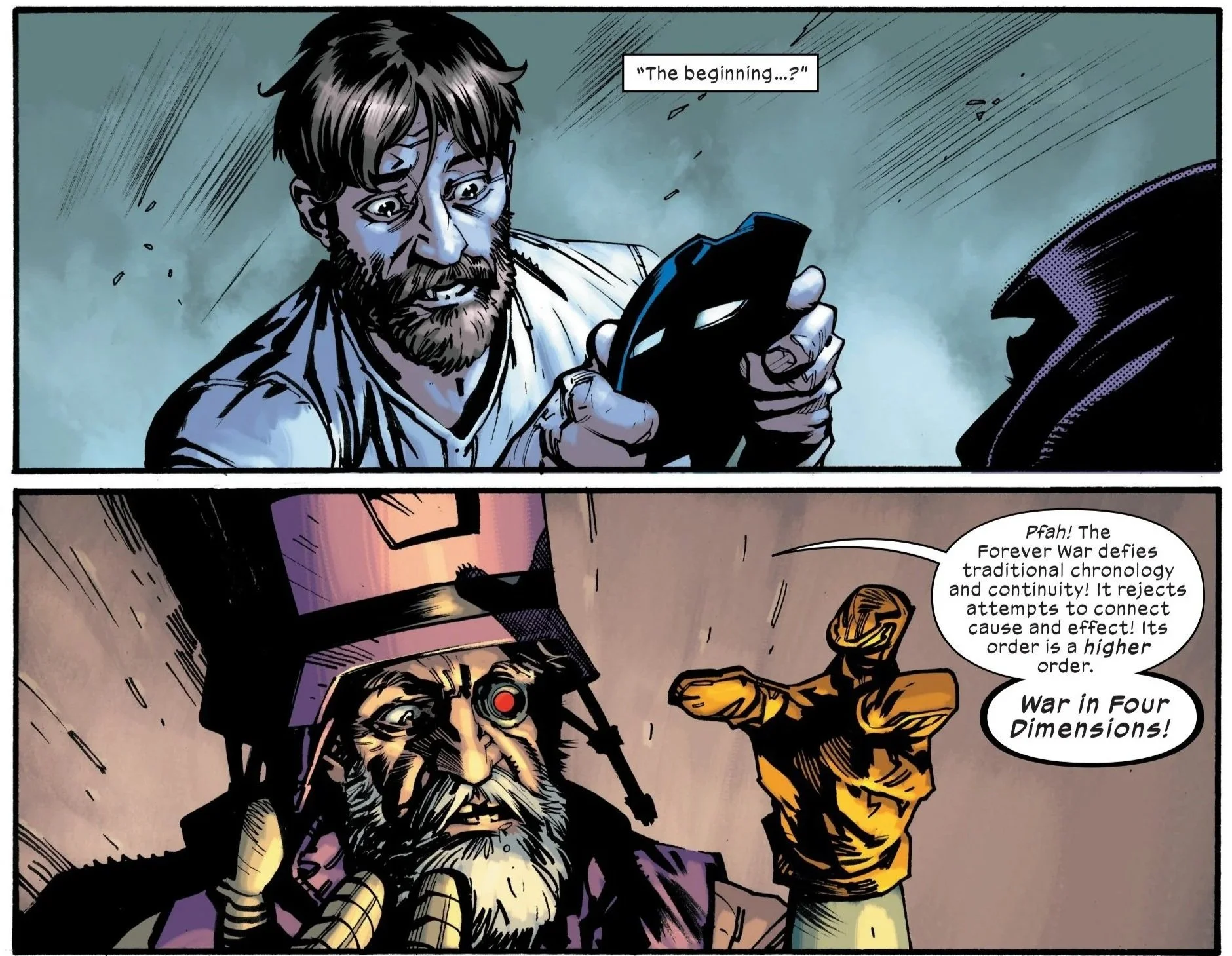
"Borrowed time" is the central theme of this issue, and Deniz Camp does his best to emphasize that aspect to its fullest. The main Ultimates team spends the majority of the book mired in Immortus’s exposition; it’s a choice by design, as his futile battle across the ages against the Maker effectively takes the wind out of everyone’s sails. Sure, there’s a lot of "quantum-fluent" lingo—the MCU’s favorite word—thrown around in ways that would make Grant Morrison both chuckle and weep. But things are never boring. Is it frustrating that the sheer volume of exposition doesn't move the needle enough? Sure. But even then, Camp maintains a tragic throughline that holds the story together.
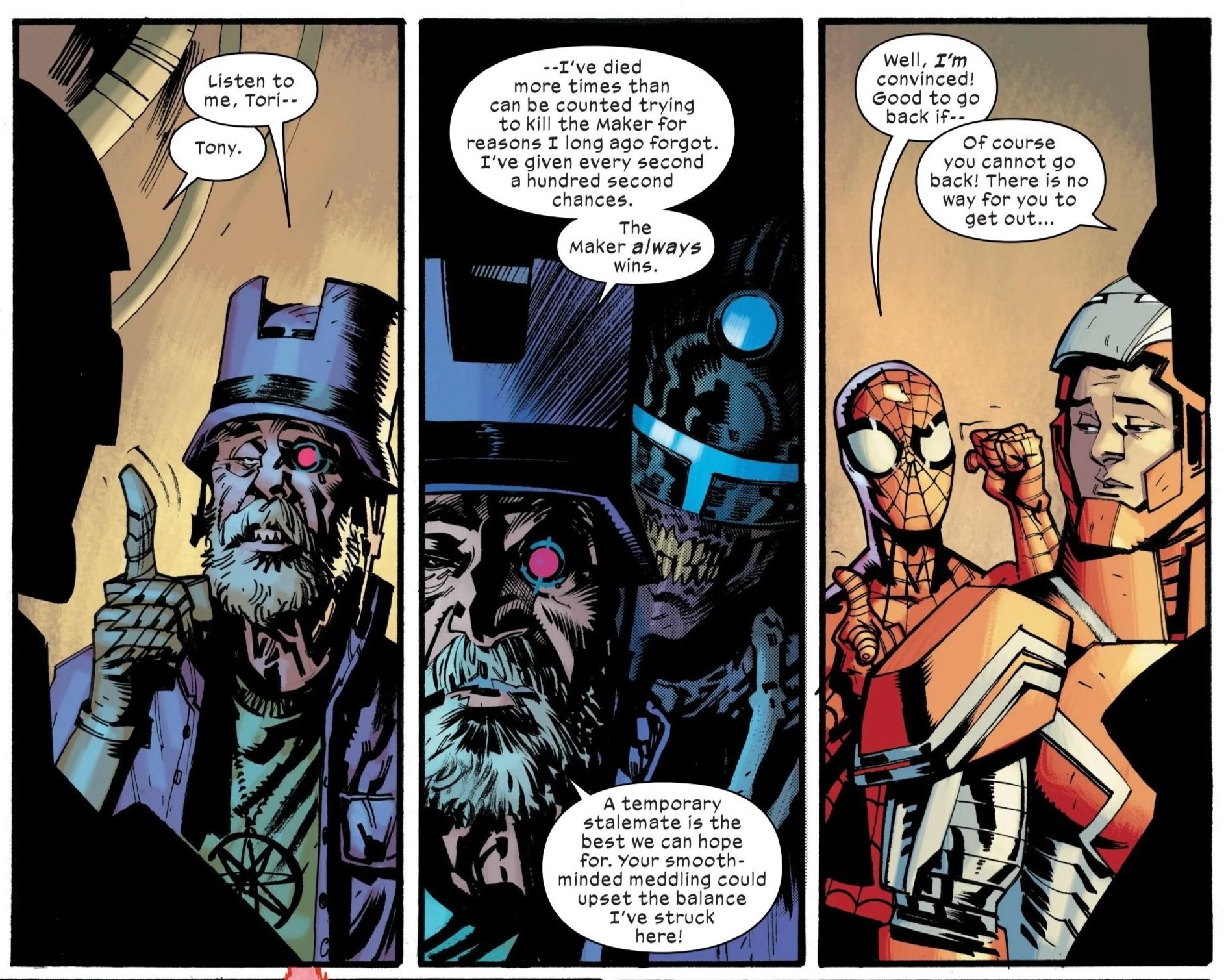
Tony, in particular, is written exceptionally well. Having finally come to terms with the failure of his mission—where the best-laid plans of Iron Men have proven for naught—he finds himself at the end of all hope. He is reunited with his father, who is also Immortus, their only salvation; yet the man simply doesn’t recognize him. There’s a certain familiarity to this pain—the child with great expectations of a parent, left at a loss when time snatches them away. For those who have parents suffering from dementia, this is a familiar feeling that Camp captures succinctly. It’s beyond heartbreaking when the Maker’s attack forces a retreat, and it is only then that Howard recognizes his son—not as family, but as the doom of things to come. Given what has been established about Tony’s use of the Immortus Engine, the final gambit Howard makes to stop the Maker carries exactly the amount of pathos and weight it needs.
Things start to get a little wonky after this, however. While it's great to see the world fighting back against the Maker’s global network, there is a lack of cohesion compared to how events were framed in The Ultimates. Cities are revolting, others are quarantined, and there is "freaky stuff" leaking out of Latveria. A lot is happening, but perhaps Camp is holding too much back for the sake of future issues. While there’s a medley of fun Easter eggs and real-world indicators for those in the know, they feel a bit too "on the nose" here, lacking the organic, brilliant satire that defined Camp’s work on the main series.
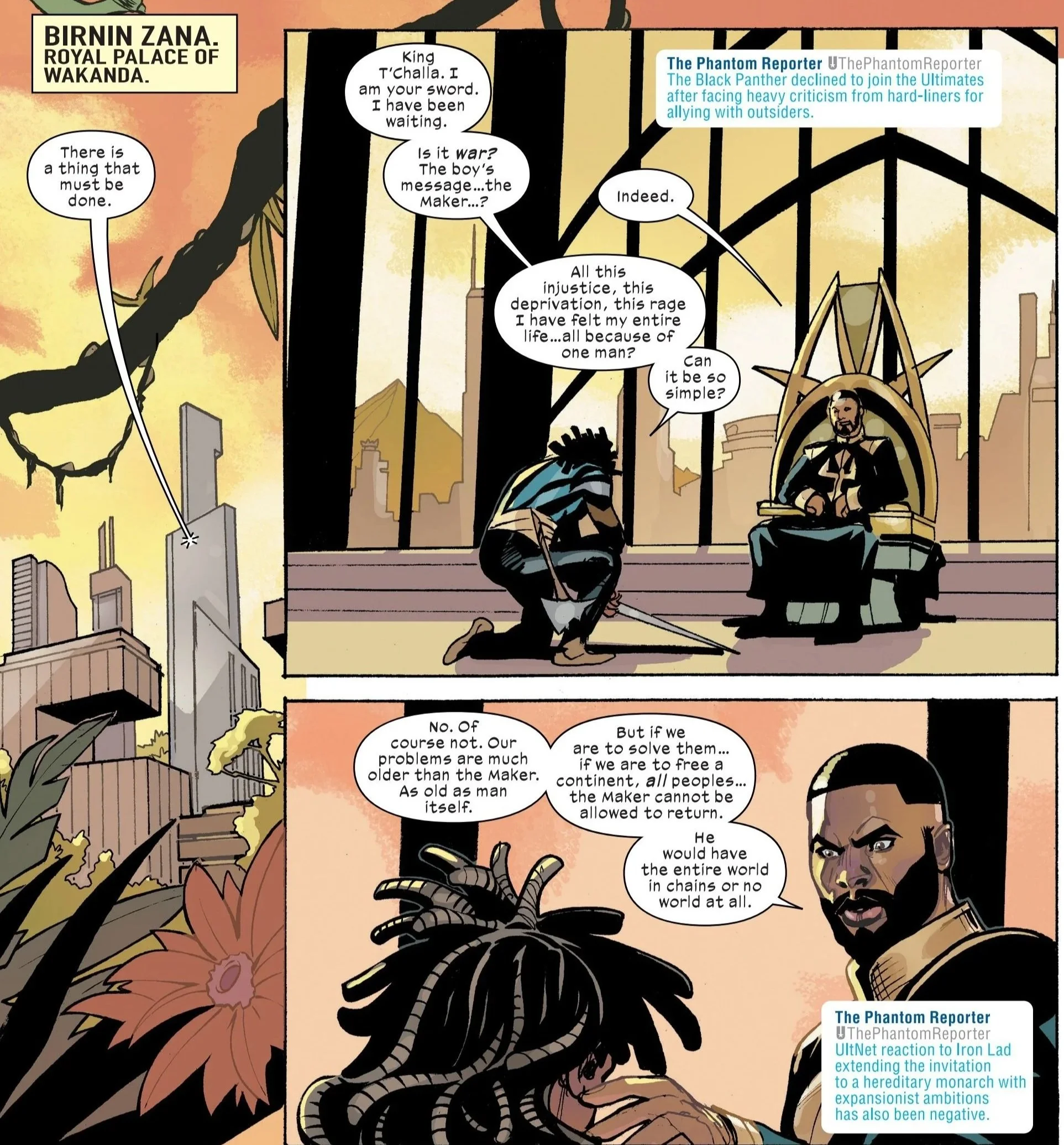
In a similar vein, Wakanda’s involvement feels exceedingly sudden, as there has been zero overlap with the Kingdom in the lead-up to this final push. Granted, that's likely because T’Challa had his own fish to fry in his solo book, but Spider-Man still managed to integrate himself into the narrative before Endgame. With the way things are panning out, I wouldn’t be surprised if both sets of X-Men—from Japan and Russia, respectively—are introduced in a similarly shoehorned fashion.
This highlights a recurring issue with Camp: his habit of writing characters from other Ultimate titles out of character. This was glaringly obvious in Ultimate Spider-Man: Incursion, Camp’s earlier event, where every character sounded utterly alien compared to their solo portrayals—with Momoko’s X-Men getting the worst of it. While there’s no guarantee history will repeat itself, the rapid-fire introductions in Endgame are a cause for concern, especially considering how T’Challa and Killmonger were acting at the close of Ultimate Black Panther.
Even the Maker himself—arguably the most important figure in this entire event—isn’t given the coverage he deserves. This is wild considering he is literally the City now. Most readers will likely feel shortchanged: "One page explaining his influence and that's it?" Camp circumvents this somewhat by making the Maker’s presence felt through his "children," strategic flashbacks, and the PTSD of Doom and Immortus. While I understand Camp is saving the "big guns" for later—and he’s on the right track with that gut-wrenching stinger at the end (seriously, that one hurts)—there is only so far you can go with Morrison references and the literary equivalent of edging before the pacing starts to suffer.
Upping the Creep Factor
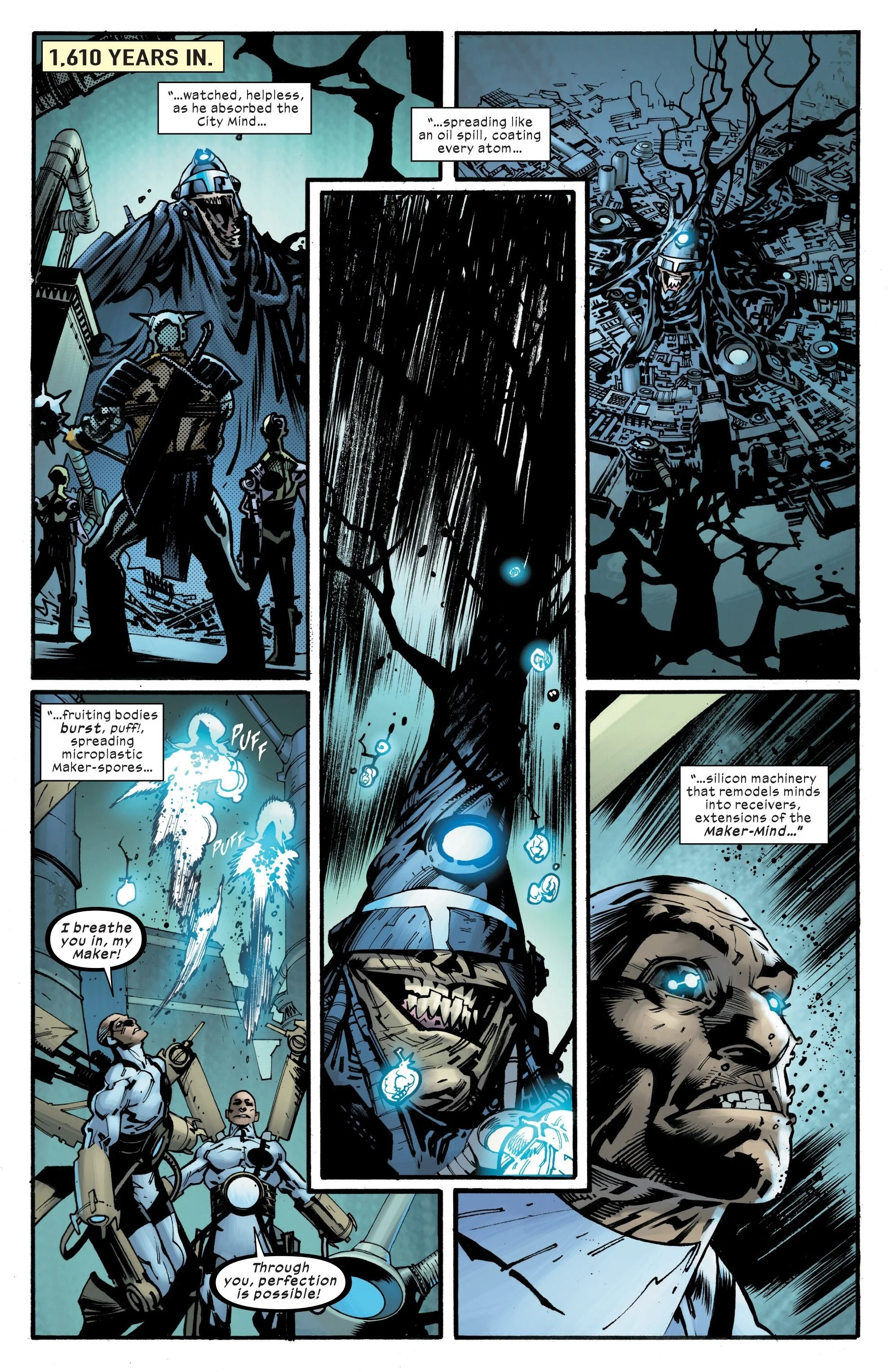
In the previous issue, many readers struggled with the jarring transitions between sequences inside and outside the City. Fortunately, issue #2 feels much more natural; the flow is smoother, featuring atmospheric line and color work that amps up the narrative tension.
For the sequences inside the City, Jonas Scharf continues his A-game with linework that delivers a genuine "creep factor." Even during moments of relative levity in Immortus’s time-traveling adventures, a pervasive air of misery permeates every page. Scharf takes the Maker’s presence beyond the physical, infecting the book’s aesthetic with a malevolent energy that drains the hope right out of our heroes. As we see the Maker evolve into a "living cancer"—with ink-black puddles snaking through flesh and metal—the linework reflects this malignant growth tremendously. It maximizes the horror of this omnicidal threat to its most terrifying extreme; you love to see it.
Similarly, the anguish of our heroes is conveyed through exceptional expression work. Tony’s saga with Howard is bolstered by the heart Scharf’s lines inject into Camp’s script. Edgar Delgado’s colors offer stark hues of energy and darkness exactly where they are needed. Make no mistake: while this is a grim book, it isn’t drained of color. From the raging empyrean energies of the Immortus Engine to the parasitic blackness of the Maker himself, the visual play here is a genuine treat.
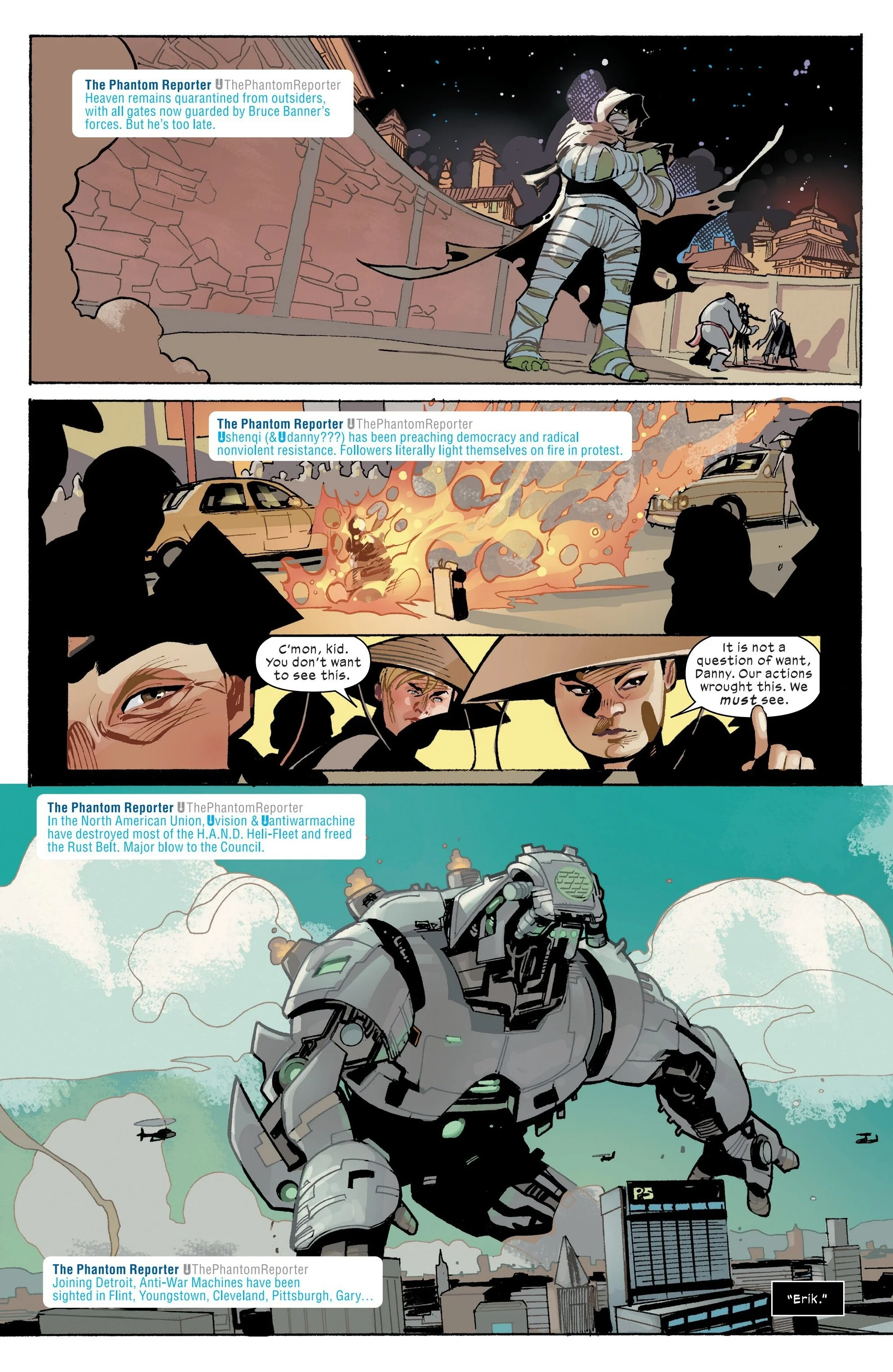
In contrast, however, Terry and Rachel Dodson’s line and color work leave much to be desired. While the segments inside the City ooze with grim gravitas, the supposedly more hopeful events of the world beyond just feel lifeless. I can’t be certain why the linework feels so drab—almost as if it’s just going through the motions—but even triumphant moments like Wakanda joining the fray or Killmonger’s continental rampage feel visually unremarkable.
Even the sequences in Latveria, which are meant to depict the Maker’s immediate, grotesque influence outside the City, fail to land; the imagery just feels "there." Terry’s color work doesn't help matters, utilizing muted shades and hues that only further drag the art down. When you somehow manage to make even a fleeting glimpse of Wakanda look almost tacky, you know there are problems—and this is only amplified when placed directly next to the impressively dark and vibrant pages from Scharf and Delgado.
Do Your Maker Proud
Ultimate Endgame #2 is a mixed bag. While the stakes are sky-high, it feels like Marvel is running out of time to reconcile what it needs to do with what it is actually doing. Deniz Camp undoubtedly has a masterful handle on Tony Stark and the core Ultimates; however, the surrounding connective tissue is starting to feel as unstable as the Maker’s own flesh and blood.
Precedent from previous events like Incursion—specifically the out-of-character writing for established Ultimate leads—remains a valid concern. For the most part, this issue manages the impossible: it somehow advances the plot and drags it out simultaneously. While employing two art teams makes sense for a story told on two fronts, it only highlights the visual inconsistencies when the narrative falters. As tantalizing as the events within the City are, the developments outside will give readers pause. Camp and company now have the unenviable job of putting those concerns to rest; I have faith that whatever twists are planned will do exactly that.

Final Verdict: Ultimate Endgame #2 takes its time to show both the heartfelt heights of this grim conflict for our heroes and the dullest of lows with pacing and out-of-character motivations that are stretched out farther than even the Maker’s own ambitions.